
 A
A After months of trying to develop an enterprise Common Operating Picture (COP) application for Army Intelligence Command and Control (AI2C) with just a lead architect, a couple developers, and no clear roadmap for developing the software experience... the customer was getting frustrated. I knew they just needed design leadership.
The effort to create sophisticated command and control (C2) dashboards for a "digital battlespace experience" that includes AI features can end up looking like a spaghetti soup of functionality, features, and emotions with no clear visual hierarchy. Widgets, wahoos, and whatsits all competing for attention. Not good. I was brought in to re-invision the software experience and win back customer confidence.
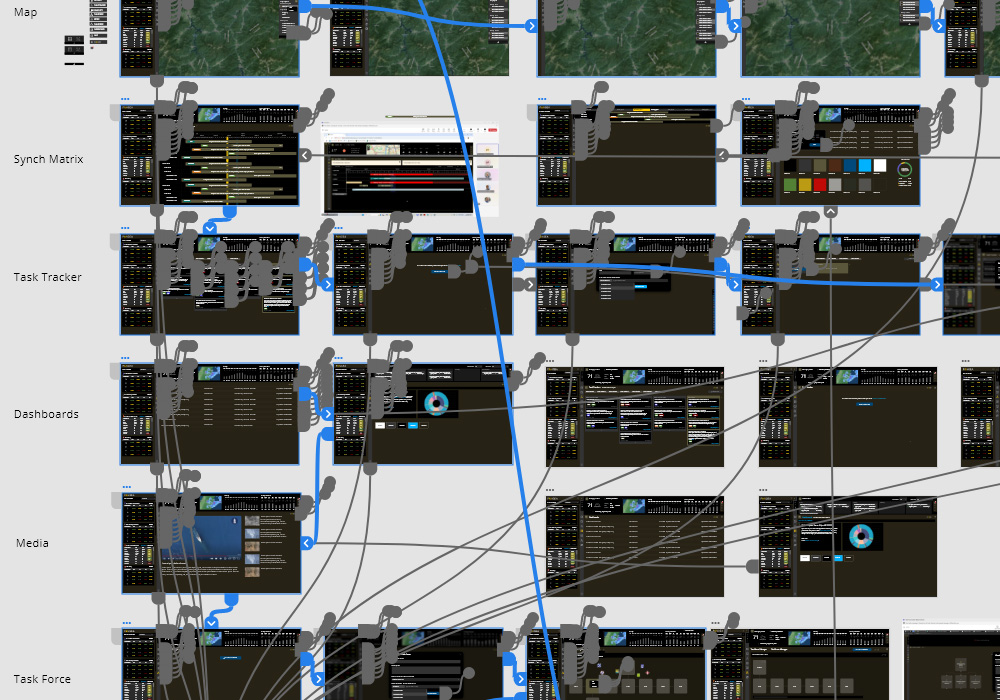
High-Fidelity Prototyping
In Spring 2024, I lead a HCD workshop with Army stakeholders. We collaboratively mapped software needs, clarified priorities, established a shared product vision, and populated a backlog of development items in Jira. Over several days, I ran hours of whiteboarding with leadership and came back a week later with a suite of high-fidelity, clickable prototypes of the software experience. We ran acceptance testing, made refinements, and prioritized the feature sets to be incorporated into agile development sprints. We now had a precise roadmap for what to build. The prototypes laid the foundation for what has since become the enterprise COP application of choice for Army, NATO, and Allied Partners around the globe.
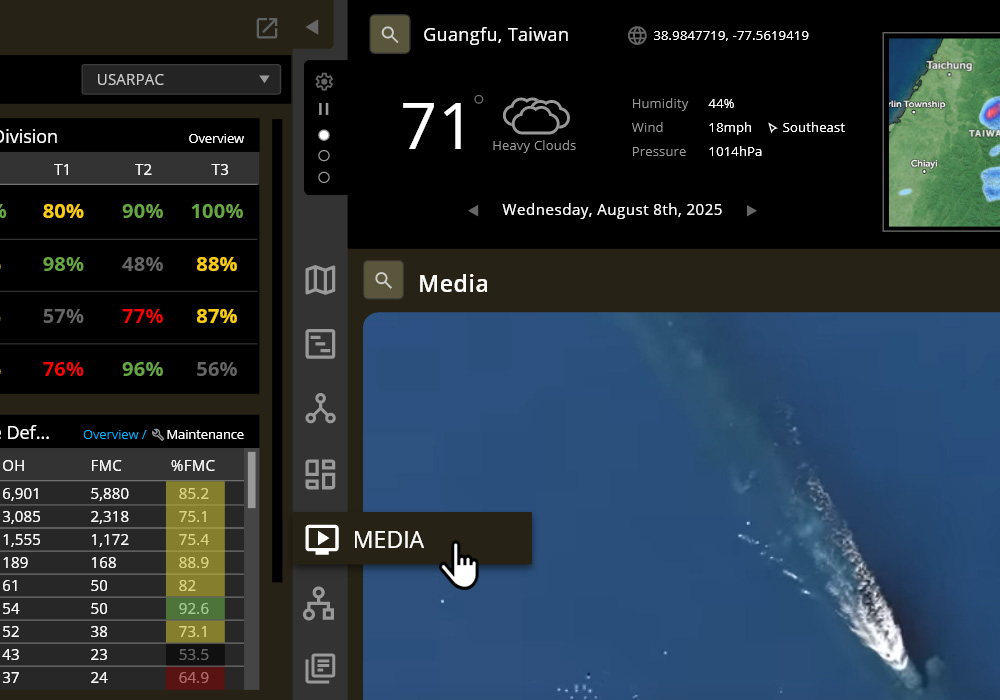
By iterating on UI prototypes before entering development sprints, we enabled the engineering teams to build against precise, unambiguous acceptance criteria, dramatically accelerating delivery velocity and reducing rework. Design-led strategy continues to be a decisive advantage. And when these systems are operated in high-stress environments with lots of situational triggers (visual alerts, audible alarms), the focus of the design is to not only be data-driven and visually intense, but to also ease anxiety, be predictable, trustworthy, customizable, and scalable.